North Carolina Auditor Releases NC Education Lottery Audit

Recommended casinos
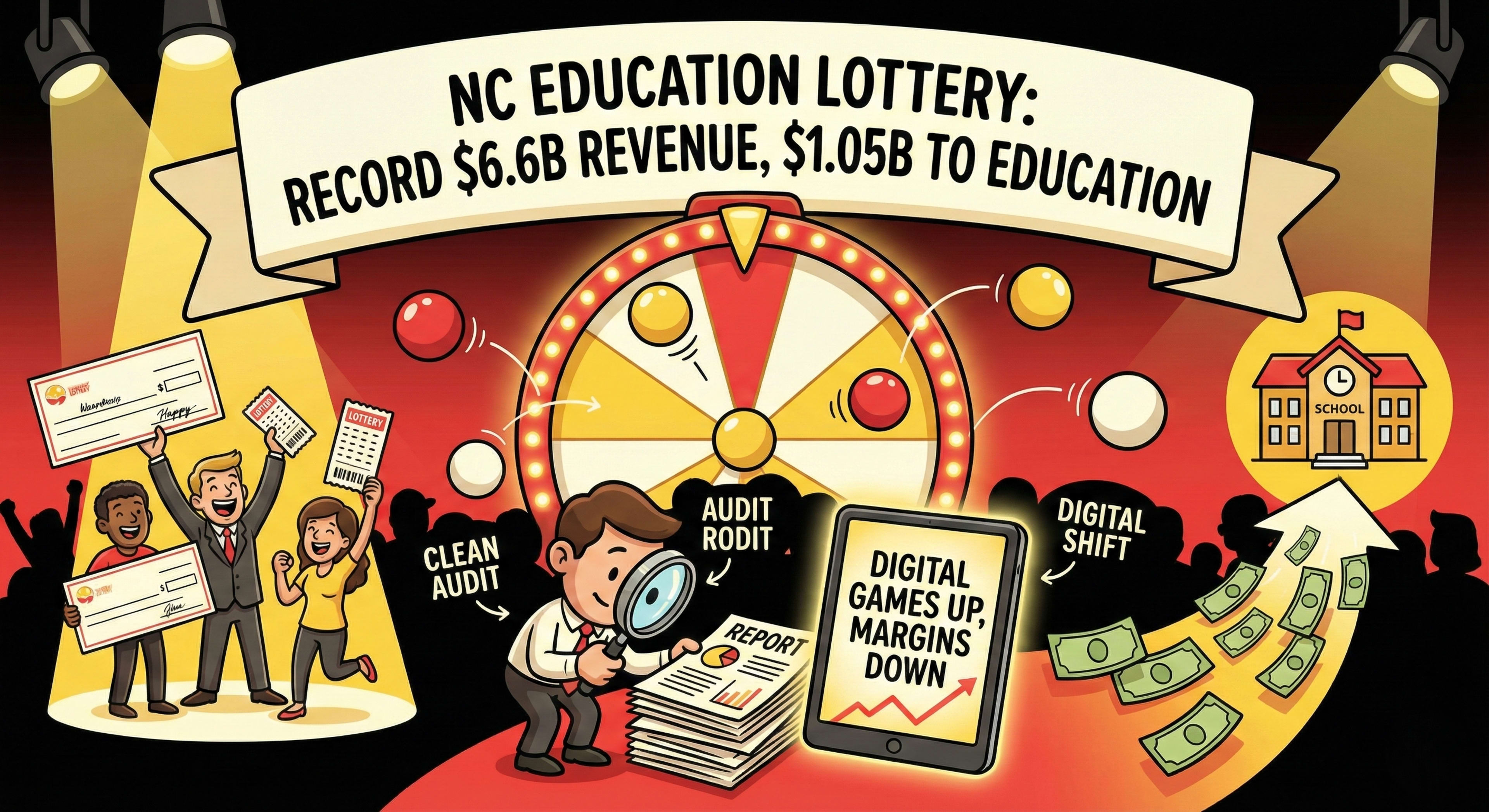
The North Carolina Office of the State Auditor has issued the annual financial statement audit of the North Carolina Education Lottery for fiscal years ending June 30, 2024, and 2025, revealing record revenues alongside a decline in net proceeds allocated to education. Conducted by independent firm Cherry Bekaert, the audit confirms the financial statements fairly present the lottery's position, with FY 2025 revenues reaching $6.6 billion—an increase from $5.4 billion the prior year. However, net revenues transferred to the Education Lottery Fund dropped to $1.05 billion from $1.07 billion, reflecting shifts in product mix and margin pressures that warrant scrutiny in a maturing market.
The report attributes the reduced transfer percentage—from 20% in FY 2024 to 16% in FY 2025—to the growing dominance of digital instant games, which now comprise nearly 40% of sales but carry lower margins compared to traditional draw and scratch-off products. State Auditor Dave Boliek engaged lottery leadership in pre-release discussions, emphasizing transparency amid these trends. This development highlights broader industry challenges as operators increasingly pivot to digital channels for player acquisition while navigating profitability impacts.
- Revenue Growth vs. Margin Erosion: Record $6.6 billion in sales underscores strong consumer demand, yet reliance on lower-margin digital instants drove the profit percentage downward, signaling potential long-term risks to beneficiary funding.
- Audit Integrity: Unqualified opinion affirms robust financial controls, assuring stakeholders in a sector reliant on public trust.
- Strategic Implications: Findings may prompt operators nationwide to reassess product portfolios, balancing innovation with sustained contributions to good causes like education.
As one of the largest U.S. state lotteries, the North Carolina Education Lottery's performance serves as a bellwether for the sector. The surge in digital play has attracted new demographics, particularly younger participants, but the accompanying margin compression illustrates the trade-offs in omnichannel evolution. Lottery officials noted the digital boost offset declines in higher-margin categories, maintaining overall player engagement.
Auditor Boliek's oversight ensures accountability, aligning with statutory requirements for independent review. The audit's clean opinion reinforces operational soundness, even as it spotlights evolving economics. For beneficiaries, the $1.05 billion transfer still represents substantial support for public schools, though the downward trend in percentage terms could fuel policy debates on optimizing proceeds.
Industry parallels are evident, with many lotteries experiencing similar digital shifts post-pandemic. North Carolina's experience offers lessons in managing hybrid portfolios to preserve funding mandates. Future strategies may involve enhanced draw game promotions or cost efficiencies to stabilize margins without curtailing growth.
This audit reinforces the importance of rigorous governance in lottery operations, where revenues fund critical public initiatives. As digital adoption accelerates, maintaining equilibrium between accessibility and fiscal responsibility remains paramount for sustained societal impact.
Sources: