How Do Lottery Draws Work: A Comprehensive Guide


Top casinos


18+ · T&Cs Apply · Play Responsibly
18+ · T&Cs Apply · Play Responsibly
18+ · T&Cs Apply · Play Responsibly


18+ · T&Cs Apply · Play Responsibly


18+ · T&Cs Apply · Play Responsibly

18+ · T&Cs Apply · Play Responsibly
18+ · T&Cs Apply · Play Responsibly
Compare the top casinos side by side across games, payments, bonuses and safety. Confirm current terms before depositing.
| Attribute | | | |
|---|---|---|---|
| Rating Editorial score from licensing, payments, games, and player-protection checks. It is not a prediction of your results. | ★★★☆☆ 6.1/10 | ★★★★½ 9.0/10 | — |
| Welcome Bonus Headline welcome offer from current provider data. Check wagering, minimum deposit, and expiry on the operator site before claiming. | €44 + 44 FS | Welcome Bonus | Welcome Bonus |
| Year Established | 2022 | 2017 | 2020 |
| Games | 3,000 | 96 | — |
| Payout Rate (RTP) Return to player (RTP) is the long-run share of stakes a game pays back. The figure here is an average across titles, not a guarantee for one session. | 95% | 96% | — |
| License The regulator named here is the authorisation we could verify. Confirm the current licence on the operator site and the public register before depositing. | Malta Gaming Authority | Malta Gaming Authority | Tobique |
| Payment Methods | American Express, AstroPay, ecoPayz, GiroPay, Interac, Jeton | Skrill, Neteller, Visa, MasterCard, Interac, Diners Club | Visa |
| Get Started |

How Lottery Draws Work: The Essential Components
A lottery draw relies on carefully designed equipment and procedures to ensure that every number has an equal chance of being selected. The core components include the drawing machine, the lottery balls, and the rigorous certification processes that confirm the integrity of both. Each component adheres to strict technical standards, and every attribute—weight, material, rotation speed, pressure, or mixing method—is thoroughly documented and verified before being made available to players in Ireland.
Choosing the Right Rolling Machine for Fair Draws
The type of drawing machine used is crucial for how balls are mixed and selected to ensure a fair outcome. In regulated lotteries, two primary systems are commonly employed:
- Gravity Pick Machines. Gravity pick machines use angled, spinning paddles to mix solid rubber balls within a clear drum. The paddles move at controlled speeds, ensuring the balls are in constant motion. When it's time for selection, a trap door opens, and the first ball to fall through is the winning number. These machines are popular due to their mechanical mixing method, which is easy to verify for fairness.
- Air-Mix Machines. Air-mix machines employ pressurised air jets to suspend and mix hollow, lightweight balls within a sealed chamber. During the selection process, the system reduces airflow around a specific outlet tube, allowing a single ball to enter the output slot. Air-mix models are often favoured for high-frequency draws, as the airflow system provides consistent mixing with minimal wear and tear.
The Lottery Balls: Precision and Fairness
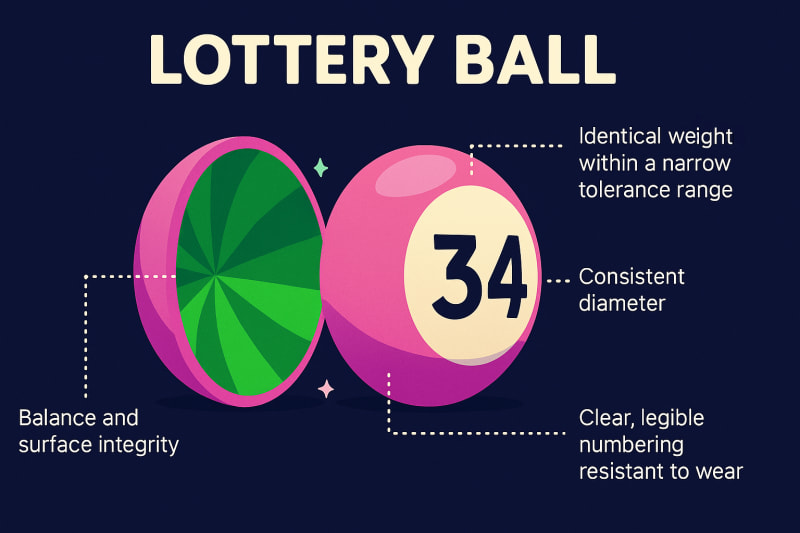
Lottery balls are manufactured to strict specifications, ensuring uniform weight, shape, and surface texture. These precise attributes prevent any ball from having an unfair advantage during selection. Materials differ based on the machine type: solid rubber balls are used in gravity pick machines, while lightweight hollow balls are used in air-mix systems. Every ball set is continuously monitored for:
- Identical weight within a very narrow tolerance range across all balls.
- Consistent diameter to ensure stable rolling and mixing.
- Perfect balance and surface integrity to prevent any bias.
- Clear, legible numbering that is resistant to wear and tear.
Ball sets are rotated and replaced regularly to prevent degradation that could compromise fairness. This meticulous attention to detail ensures that every Irish player has a fair shot at winning.
Ensuring Trust: Equipment Certification for Irish Players
Equipment certification is vital to confirm that the drawing machines and ball sets meet all technical and regulatory standards before they are used in public draws for Irish players. The certification process typically involves:
- Independent laboratory testing to assess performance and reliability.
- Thorough inspection of all mechanical components for wear or defects.
- Verification of ball weight, balance, and durability to unquestionable standards.
- Evaluation of mixing consistency to ensure randomness.
- Comprehensive documentation of all measurements and test results for transparency.
Certified equipment must undergo periodic re-testing to ensure it continues to operate within required limits. Draw administrators are responsible for maintaining detailed logs of testing dates, component replacements, and calibration records. This thorough documentation demonstrates that the system operates reliably and complies with all relevant regulatory requirements for games played in Ireland.
Pre-Draw Checks: Calibration and Scrutiny for Irish Lottery Fans
Pre-draw procedures are essential to guarantee that the drawing machine and ball sets are in perfect condition before any numbers are selected. Every step is meticulously documented, supervised, and carried out in accordance with the stringent standards set by regulators and certification bodies. These procedures confirm that each component operates within approved tolerances and that no equipment defects or irregularities can possibly influence the draw's outcome. The ultimate goal is to eliminate all variables, ensuring the draw reflects a fair, unbiased, and fully verifiable result for all participants in Ireland.
Testing and Weighing
Testing and weighing verify that every ball in the approved set meets the required specifications. Technicians measure and weigh each ball individually using calibrated instruments. Each ball must match the official reference weight and diameter within a narrow tolerance. Any ball that falls outside this range is removed from the set and replaced with an approved spare. Technicians inspect the surface of each ball for scratches, deformation, ink wear, or changes in coating that could alter its balance. These checks ensure that all balls behave identically during the mixing phase.
Machine Testing
Machine testing confirms that the draw machine performs as expected under supervised conditions. Technicians run a series of test cycles before the official draw. These cycles can include dry runs without balls, full test draws with balls, and calibration checks for paddles, drums, air injectors, or trapdoors depending on the machine type. Technicians measure factors such as rotation speed, airflow pressure, vibration levels, and mixing consistency. If any value falls outside the approved range, the machine is recalibrated or replaced. Each test run is documented in a log that records the exact time, personnel involved, and measurements observed.
Auditor Presence
Auditor presence ensures independent oversight of every stage of the pre-draw process. Certified auditors verify the identity of the ball sets, check the machine calibration logs, and confirm that the equipment used matches the approved inventory. Auditors observe the weighing process, monitor each test draw, and sign off on all measurements. They ensure that no unauthorized equipment is introduced and that no component is altered or replaced without documentation. Their approvals are recorded in official reports that become part of the draw’s permanent record..
Live Draw Execution: The Moment of Selection
The live draw execution is the part of the process where the verified machine and approved ball set produce the official winning numbers. Every action follows a documented sequence, ensuring that the results are transparent, traceable, and valid under regulatory rules. The steps below outline the complete process in a clear and scannable format.
Formal Start and Introductions
The formal start and introductions confirm the identity of the draw and establish transparency before mixing begins. The host:
- States the draw name, date, and time.
- Introduces the certified auditor, draw officials, and technicians.
- Confirms that all pre-draw checks, equipment tests, and ball inspections have been completed.
- Identifies the specific machine and ball set selected for the draw.
This sequence ensures viewers know that the draw follows approved procedures from the beginning.
Ball Loading
Ball loading prepares the machine for active mixing. Technicians place the verified ball set into the drum or air chamber while the auditor observes each step. The chamber door is closed and secured with locking mechanisms approved by the regulator. In some jurisdictions, the auditor places a tamper-evident seal on the door to confirm that it remains closed until after the draw. This process ensures that only the approved ball set is used.
Mixing Phase
The mixing phase creates the random conditions needed for fair selection. Technicians activate the machine, and the paddles or air jets begin to mix the balls. Regulations often specify a minimum mixing duration to ensure that all balls remain in motion before selection begins. Mixing continues until the auditor confirms that the machine has reached the required operating parameters. This phase ensures that every ball has an equal opportunity to enter the selection area.
Number Selection
Number selection occurs when the machine transitions from mixing to drawing. In a gravity pick machine, the trapdoor opens and the first ball that drops into the output slot is captured. In an air-mix machine, airflow pressure adjusts to guide one ball into the exit tube. The machine repeats the selection process until all required numbers are drawn. The host reads each number aloud as it appears, and the control panel displays the results simultaneously. This ensures that the selection is visible to the audience and the audit team.
Confirmation
Confirmation verifies that every selected number is accurate and properly recorded. The auditor performs these checks:
- Confirms that the ball in the output slot matches the number displayed on-screen.
- Verifies each number in the sequence until the full combination is complete.
- Checks secondary numbers (bonus balls) if the game format requires them.
- Compares results with the automated logging system.
- Signs the official draw sheet to validate the outcome.
Once the auditor approves the results, the draw is considered complete and ready for post-draw processing.
Post-Draw Verification and Legal Archiving

Post-draw verification and legal archiving ensure that the winning numbers, draw equipment, recordings, and supporting documents are accurately and securely preserved. These steps confirm that the draw followed all required procedures and that the results remain traceable for as long as regulations demand. The verification and archiving process ensures the integrity of the outcome, allowing regulators, auditors, and players to review the draw if necessary.
Securing the Results
Securing the lottery results ensures that all equipment and materials used in the draw are protected from tampering after the event. This stage includes:
- Recording the official sequence of winning numbers.
- Sealing the ball set used for the draw in a tamper-evident container.
- Storing the drawing machine in a restricted area or applying regulator-approved locks.
- Documenting the exact time the equipment is secured.
- Archiving operator and auditor signatures on the verification forms.
These actions preserve the integrity of the equipment and confirm that the draw cannot be altered afterward.
Public Record
Public record requirements ensure that the draw results are accessible and transparent. Typical steps include:
- Publishing the winning numbers on the official lottery website.
- Uploading the full draw recording for public viewing when required.
- Storing digital logs, verification sheets, and audit forms in a secure archive.
- Retaining video and data files for the period required by local law.
This creates a permanent, traceable record of the draw that regulators or the public can review.
Conclusion
A secure lottery draw depends on documented procedures, verified equipment, and independent oversight at every stage. Each part of the process—from pre-draw calibration to final archiving—helps ensure that the results are accurate, traceable, and compliant with regulatory standards. When all steps are followed correctly, players can rely on the fairness of the outcome and the integrity of the system behind it.
If you want to learn more about how lotteries operate, explore the full collection of lottery guides on LottoRanker. Each guide provides clear, factual explanations that help you understand the systems, regulations, and tools involved in the lottery.
Frequently Asked Questions
What exactly is a lottery draw?
A lottery draw is a carefully managed process where approved equipment is used to select winning numbers. This selection is carried out under strict supervision, with every step documented and verifiable. The process adheres to regulatory standards to ensure fairness, transparency, and full traceability for all participants in Ireland.
How do technicians prepare the lottery machine before a draw?
Before each draw, technicians calibrate the machine, perform test runs, check rotation and airflow, and ensure all mechanical parts are within approved tolerances. All measurements are carefully logged and reviewed by an independent auditor to maintain accuracy.
What happens during the mixing phase of a lottery draw?
During the mixing phase, paddles or air jets keep the balls in constant motion for a regulator-approved duration. This ensures that each ball has an equal opportunity to be selected when the draw commences, maintaining fairness.
How are lottery results verified following the draw?
Lottery results are verified by comparing the physical balls with the machine display, automated logs, broadcast footage, and backup camera recordings. The auditor approves the results only when every record matches perfectly, ensuring no discrepancies.
How long are lottery draw recordings kept?
Lottery draw recordings, verification sheets, and digital logs are archived according to Irish regulatory requirements. Some lotteries store them for months, while others retain them for several years to comply with legal and auditing standards.
What equipment is used in an Irish lottery draw?
Lottery draws in Ireland use certified drawing machines and approved ball sets. These components meet stringent specifications for weight, balance, and durability. Each item is rigorously tested and verified before being used in an official draw to guarantee integrity.
Why are independent auditors present during lottery draws?
Auditors provide essential independent oversight. They verify ball weights, supervise test runs, confirm equipment identity, check live results, and sign official documentation to validate the entire lottery draw process in Ireland.
How are the winning lottery numbers chosen?
Winning lottery numbers are selected mechanically. Gravity pick machines release balls through a trapdoor, while air-mix machines use controlled airflow to guide balls into an output channel. Each selected number is displayed on-screen and immediately verified for accuracy.
What happens to the equipment after the lottery draw in Ireland?
After the lottery draw, the ball set is sealed in a tamper-evident container, and the machine is secured in a restricted area. Documentation records the time, personnel involved, and storage conditions to maintain complete traceability and security.
Where can I find more information about lottery systems and procedures in Ireland?
You can explore LottoRanker’s comprehensive collection of lottery guides for more details. Each guide offers clear, fact-based explanations about lottery tools, regulations, draws, and how to participate responsibly in Ireland.